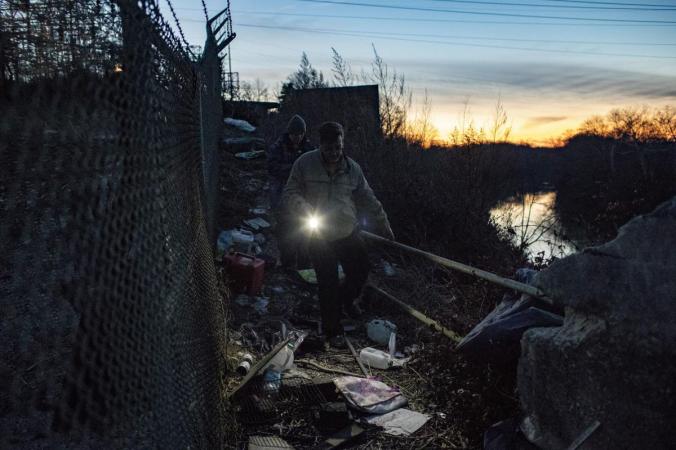
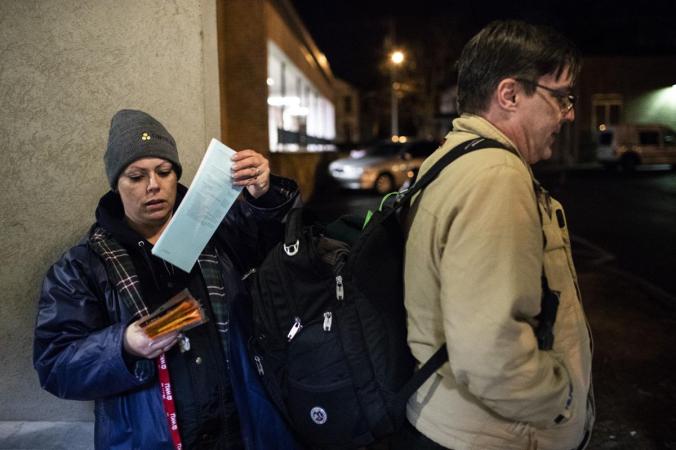
Four volunteers strap on backpacks, lace up thick-soled boots and grab flashlights from the trunk of a sedan, as if about to go on a wilderness safari.
They call out “HOTEL INC” and “Outreach” as they trek off the beaten path to one of the many hidden homeless encampments in Bowling Green.
Rhondell Miller, executive director of HOTEL INC, leads the charge on this particular night in early January. She tiptoes over gravel and grass littered with batteries, semi-frozen buckets of drain cleaner and an assortment of food and clothing items.
“These shoes have barely been worn,” observes Melissa Cowles, coordinator of HOTEL INC’s Street Medicine program, which treats Bowling Green’s homeless with basic medical care and services three times each week – wherever they might be.
Nobody is home. During the winter, the homeless desperately seek shelter from the harsh conditions.
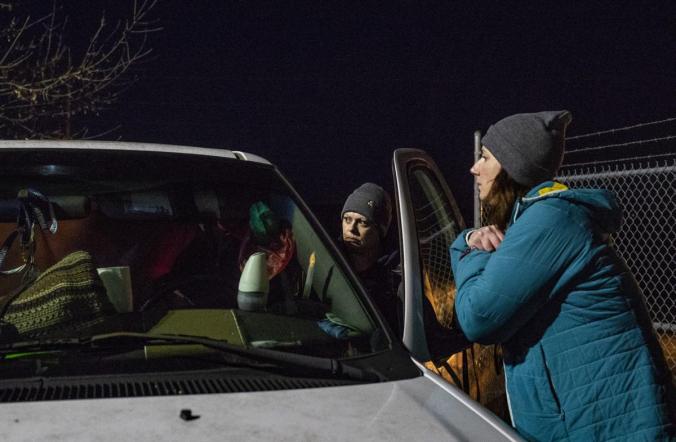
They move on to busy parking lots, where, unbeknownst to the people shopping around them, some vehicles serve as people’s homes. Amy Stephens, a social worker and HOTEL INC housing navigator, approaches a big truck with Cowles to visit a single woman who thinks she has the flu.
They then drive to a downtown hotspot where people unable to find shelter for the evening tend to congregate. Ensuring that each client had sufficient cold weather gear is a primary objective, along with feeding them dinner.
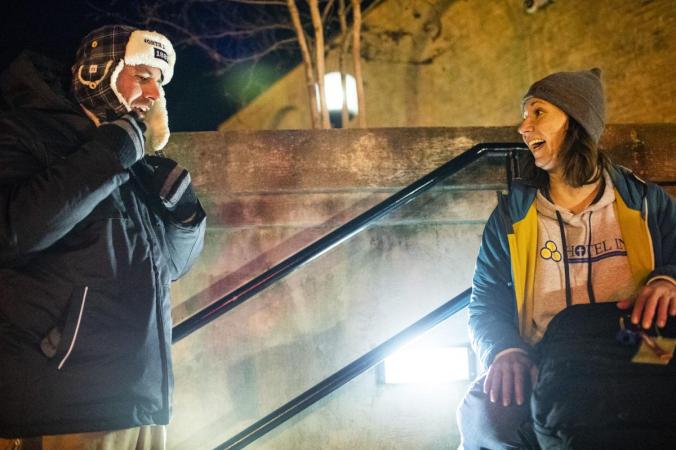
William Shultz approaches the crew, and they instantly supply him with a weather-proof jacket, hand warmers and a fuzzy trapper hat.
“You look like you could be on the cover of GQ magazine,” says volunteer Chip Kraus, who is the STD investigator at the Barren River Area Health Department.
They catch up on life happenings, and Shultz explains that he’s been one week sober and continuing to work despite aggravated knee and back pain. “It feels good, and I just have to keep my head together,” he says.
Shultz and other clients began as random encounters on the streets, and then they built trust. Eventually, the clients became comfortable enough to disclose the personal information needed for the street medicine team to truly help them.
• • •
In 2012, HOTEL INC patients were treated at the office once weekly by a nurse practitioner.
They began literal street rounds in 2014, after training under Dr. Jim Withers, a pioneer of street medicine in the U.S.
Withers founded the Street Medicine Institute in 2008 with the goal of assisting communities and medical schools interested in creating programs. There are now 85 cities around the globe and at least 25 medical schools that have street medicine programs.
“It quickly became a health care delivery model,” Withers said, and “became a movement nationally and internationally.”
Practicing street medicine is “a radical plunge into the reality of excluded people,” said Withers, who began practicing in Pittsburgh in the early 1990s after witnessing the needs of the street homeless. “It’s a no-brainer, it’s where the really sick people are.”
Each city’s homeless situation is different – but with the same elements and same characters.
“The missing piece is the medical work that goes directly to the people,” he said.
Most major cities, where the homeless populations are often visible, have developed street medicine programs, but the homeless populations in smaller communities like Bowling Green can be overlooked, according to Withers.
“They underestimate the scope of the problem,” he said. “If you’re outdoors in a small community, you’ve really run out of options. Most people really cling to the indoors.”
As one of the only small cities with street medicine programs, Bowling Green serves as an example for similar-sized communities. In 2018, HOTEL INC received a grant to mentor a new street medicine program in northern Kentucky, and Withers refers towns considering developing programs to HOTEL INC.
• • •
HOTEL INC serves about 60 people each month with 150 services. The street medicine team conducts vital checks, dresses wounds, arranges doctor’s appointments and team members instruct clients on how to be compliant with doctors, how to get medications and how to find transportation.
HOTEL INC also offers a medical respite program, which is 30 days or more of housing for clients recovering from medical procedures.
The street medicine team also conducts inclement weather checks during incredibly cold or incredibly hot times. Both seasons are dangerous, though heat is the No. 1 cause of weather-related death, according to the National Oceanic and Atmospheric Administration.
Sometimes, the street medicine team simply asks the clients how they’re doing.
“It’s a mixture of medical, social, therapy and friendship,” Cowles said.
The street medicine team has mapped out homeless hot spots. City police officers will inform them of encampments, and sometimes a nurse at a hospital recognizes that a person is homeless and will contact HOTEL INC. Cowles meets with the patient, begins to build a relationship and can help the patient get discharged.
Homeless people themselves also tell the team where to go – and where not to go.
That’s part of building the rapport.
They work with repeat clients, and gradually add new clients. Cowles even met three new people on Christmas Day.
The street medicine program is partially grant funded, and partially funded by private donations.
Annually, the program operates on a budget of about $49,000 – but it’s variable. They’re currently working with about $8,000 from two grants and are planning to renew the same grants in the spring with the Good Samaritan Foundation and WellCare Health Plans.
They’ll have to rely on donations until the next grant. Expenses include the single staff member’s salary, housing costs for the respite program, transportation costs, medical copays and basic first aid care, including over-the-counter medications, bandages and ointments. “Each part of our budget is looked at monthly,” Miller said
The street medicine program also relies on helping hands. There are 10 volunteers with various medical, mental health and social work backgrounds that collectively contributed 400 hours of service in 2018.
They sometimes get volunteers from Western Kentucky University’s nursing program. Miller hopes the University of Kentucky College of Medicine Bowling Green Campus will become part of a future expansion.
Kraus became involved about a year ago after learning about street medicine at a medical conference. His specialty is sexual health and reducing sexually-transmitted diseases through the needle exchange program at the Barren River Area Health Department.
“Street medicine is a great way to make sure they have all the information about their health,” Kraus said, such as the importance of testing for STDs and where to get free testing.
“They feel marginalized. They feel like they’re going to be judged and don’t feel accepted,” Kraus said. “Going out (through street medicine) breaks down those barriers and makes them comfortable and confident to get the treatments that they do need.”
Prior to the Affordable Care Act, an estimated 12 to 20 percent of the street homeless were able to get insurance. Now, it’s up to 85 percent, Withers said.
“It is a bit of a third world out there,” Withers said. “We keep going out and seeing them die, when you know insurance might help.”
In Bowling Green, the ACA has helped hundreds of people served through street medicine access health care and a primary care physician, according to Miller.
The insurance access also helped the homeless learn when to go to a doctor’s office and when to go to the emergency room.
“It’s really hard helping that person experiencing homelessness navigate that health care system,” Miller said.
In turn, street medicine helps reduce the number of emergency visits, while helping prevent chronic illnesses from spiraling.
“There’s no way that we don’t (save money),” Miller said. “They’re one of the biggest drains on our economics.”
• • •
The average life expectancy in the U.S. is about 80, while most experts estimate the homeless life expectancy to be about 50.
Many individuals – the exact numbers are debated – file for bankruptcy due to high medical bills, so it’s not a stretch of the imagination to think that the homeless population is inherently one of the most sick and vulnerable populations – and they only become more sick and vulnerable on the streets.
Nationwide, street homelessness increased between 2016 and 2018, according to a 2018 U.S. Department of Housing and Urban Development report, after about a decade of declines.
The number of unsheltered homeless rose by 9 percent between 2016 and 2017, and by about 2 percent between 2017 and 2018.
Chronic homelessness is on the decline in Warren County, according to Miller, but she estimates that 400 to 600 people still experience homelessness on a given night – and they experience some conditions unique to other homeless populations.
Earlier in January, Miller strolled into a chapel and pointed to a plaque engraved with the names of homeless people who died in Bowling Green.
“Alcohol, alcohol, cancer, alcohol,” she said.
Alcohol is the leading cause of death for the homeless in Bowling Green, according to Miller, followed by tobacco-related deaths, including heart disease and cancer.
In major cities, about 80 to 90 percent of deaths on the street were due to fentanyl in the past five years, according to Withers.
That’s not the case in Bowling Green, though substance abuse remains a significant risk factor to the homeless community’s health.
In addition to addiction treatment, about half of homeless people require mental health treatment, according to Miller.
Then there is physical health. Wounds are one of the most common health concerns the street medicine team treats, especially on the feet.
The homeless walk many miles each day, sometimes in wet socks and shoes, and their feet become raw, blistered and infected, according to Cowles.
Many clients have cancer, chronic obstructive pulmonary disorder, high blood pressure and type 2 diabetes – all illnesses difficult to manage on the streets due to the high levels of stress and lack of access to nutritious food. Some people develop type 2 diabetes and hypertension, both strongly correlated with lifestyles, after becoming homeless.
“While we’re out on the streets, there’s a priority of identifying what kind of health needs they know they have,” Cowles said.
• • •
Several weeks ago, two dozen homeless people crowded into a small room waiting to hear if they were going to get a bed that night through Room in the Inn, a program organized by several churches to house the homeless during the cold winter months.
They sit around tables with backpacks, chips and soft drinks, and discuss the happenings of their day-to-day lives. Some people are grumpy, while others are cheerful and enjoy the company of those around them.
A few people offer socks and supplies to one another, and conduct their own wellness checks before Cowles and Stephens arrive.
“They’re good people, they build such a community,” Cowles said. “Sometimes they give up their beds to others who they think might need it more than them.”
While Stephens prepares some basic first aid, Cowles slowly winds through the tight space to speak with familiar faces and some people she hasn’t seen in weeks – or months.
Most people light up at the sight of her.
She asks about their holidays, if they have enough food, or if they have any health issues. She arranges for a few appointments, and happily agrees to provide proof that a man struggling to obtain insurance was indeed homeless.
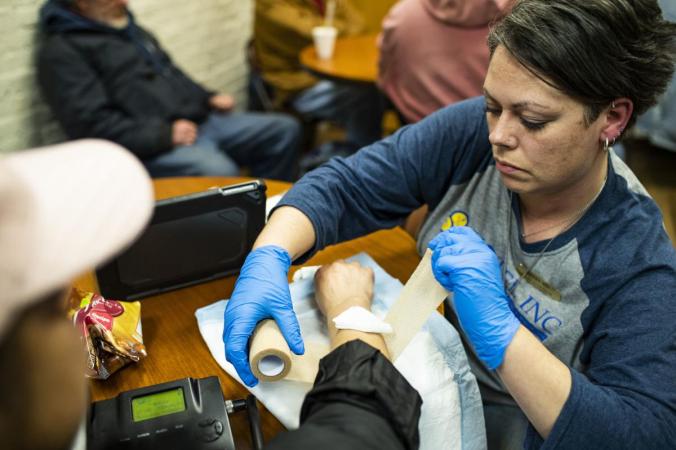
A 20-something girl has a burn on her forearm from her job as a cook. Stephens places a cloth on the table, cleans the wound and applies an antibiotic ointment before wrapping it up. Other homeless people watch as Stephens tends to the wound, and eavesdrop as their peers speak with Cowles.
Many people share complaints about their situation, and Cowles listens patiently and offers a few hugs. She makes eye contact, nods along and offers kinds words.
“Sometimes they just need that person to say ‘hey, what can I do for you?’ ” Cowles said.
• • •
Rickey Dantzler lived on the streets for two years. He pulled out his own teeth when the mouth pain became too severe. He smoked cigarettes, and he drank when he was bored or trying to go to sleep.
Cowles met Dantzler in March.
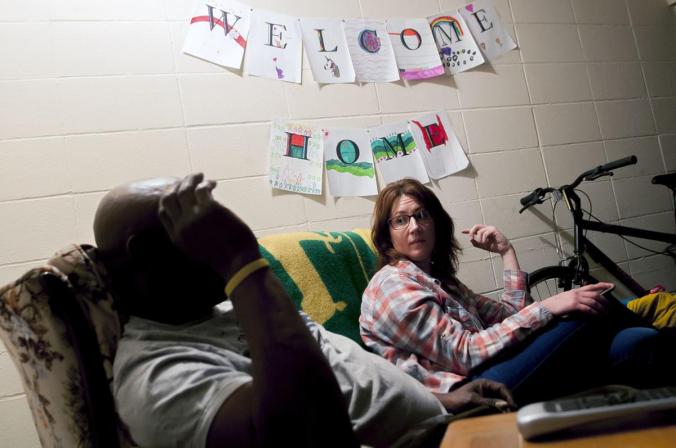
Earlier this month, Cowles checked on Dantzler at his new home.
They sit on his couch, draped with a John Deere blanket, in front of the television to discuss his progress.
He’s not drinking anymore, he’s down to four packs of cigarettes a week, and he’s replaced some of the pounds he lost while living on the streets.
“I’d probably be dead,” Dantzler said. “I’m here now because of them.”
The street medicine team helped him get on Medicaid, remove fragmented teeth at the dentist, get a cardiac stent placement and provided him with a home while he was recovering from the percutaneous procedure.
“We’ve done so much all to my benefit, and I’m sure appreciative,” Dantzler said.
Dantzler initially refused the assistance, and described a mistrust for what he perceived as money-hungry doctors and hospitals.
But the street medicine team was persistent, according to Cowles.
“You didn’t encourage me to go, you made me go,” Dantzler corrected Cowles.
He’s still dealing with high blood pressure, and trying to cut back on cigarettes, which he started smoking when he was just 9. He’s also trying to cut back on meat to help his heart, but says, “I’m a country boy, I like ham.”
Today, Dantzler is working, housed and happy – and he appreciates being able to utilize his cooking skills inside once again instead of building fires by hand.
And he wants other people to know how good-natured Cowles and the HOTEL INC staff are – and to trust them if they’re offering help.
“You ain’t going to find nobody better,” Dantzler said.
Cowles appeared particularly proud of Dantzler and the progress they made in the past year, later explaining, “health equals housing.”
• • •
At HOTEL INC’s annual memorial event in December, the oldest person was 60.
The Street Medicine program can’t save every life, but the team tries.
“It depends on the case, sometimes people really want the help,” Cowles said. “You have to do whatever they’re comfortable with.
“It’s our job to keep to building that relationship so that they care enough,” she said.
View the published story.

 Caroline Eggers